Rolle rückwärts
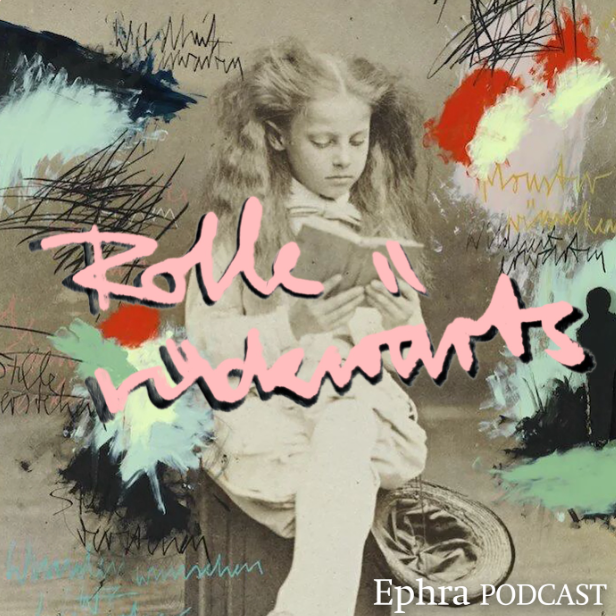
In the Ephra podcast, Rebecca Raue and her guests take a mental step backwards, returning to the formative moments of childhood and youth that have shaped our personality, our decisions, and our view of the world.
At the heart of each conversation are those key biographical turning points where experiences, challenges, and encounters have left lasting traces. The discussions invite listeners to take a fresh look at their own journey and to reveal just how deeply early experiences influence our attitudes, relationships, our sense of self.
In this episode of "Rolle rückwärts", Rebecca Raue talks to Cymin Samawatie, composer, conductor and singer. The conversation leads back to a childhood between two cultures and to the painful feeling of not truly belonging, either in Germany or in Iran. Cymin tells of exclusion and shame, of a household riven by conflict, and of how music became a refuge early on. She finds a decisive figure in her teacher, Frau Kauer, who recognises her musical talent, believes in her and opens up possibilities that no one had previously thought her capable of.
Rebecca and Cymin talk about how these early experiences gave rise to an artistic path of her own, and how the longing for belonging can still be found in Cymin's work today. Where does the courage come from to follow one's own path despite all the resistance? With her music, Cymin opens up spaces in which different people come together to listen to one another and to find their place, with all their strengths and weaknesses.
In this "Rolle rückwärts", Rebecca Raue talks to Mercy Dorcas Otieno. Mercy is an actress at the Deutsches Theater Berlin and looks back on an extraordinary life that took her from her childhood in rural Kenya via Austria to the stages of German-language theatre. The conversation traces the course of a life shaped by early separation, the search for belonging and the formative love of an exceptional grandmother.
The episode tells of family ruptures and untold truths, and of how people can become anchor points when other connections are missing. From pain, resilience and the search for one's own roots, an attitude develops that is defined by trust, courage and conviction. It becomes clear that knowing, reflecting on and engaging with one's own history can help in finding one's own path.
In this episode of "Rolle rückwärts", Rebecca Raue talks to Ali Kaaf. The artist, whose work combines painting, sculpture, film and installation, looks back on a childhood between Algeria and Syria. Shaped by early separations, frequent new beginnings and a life spent between different places, a special relationship to landscapes, materials and forms of memory emerges early on.
The episode tells of black basalt stones in southern Syria, of family ruptures and the formative power of places long since gone that continue to have an effect. It is about the question of how our origins shape our perception, and how an artistic attitude can arise
from personal experience.
In this episode of "Rolle rückwärts", Rebecca Raue talks to Christoph Marti, known to many as Ursli Pfister of the Geschwister Pfister. The conversation traces the course of a life shaped by early imagination, deep sensitivity and a great love of beauty, music and theatre. Between childhood memories of glittering clothes pegs, family rituals and first experiences on stage, there emerges early on the sense that art can be a place where the world allows itself to be transformed.
Rebecca and Christoph talk about belonging and exclusion, about speechlessness within family structures, and about how vulnerability, longing and resilience can give rise to an attitude that goes beyond the artistic alone. It is a conversation about the meaning of unconditional beauty as a feeling, about glitter as protection, vessel of memory and expression all at once, and about the attempt, despite all the ruptures, to preserve the ability to see life as something wondrous.
In her second episode of "Rolle rückwärts", Rebecca Raue talks to Patricia Horeni, head teacher of the Hansa primary school in Berlin. The conversation leads back to a childhood shaped by educational advancement, curiosity and the desire to broaden one's own world. From family experiences rooted between a rural background and cultural openness, questions of participation, courage and self-efficacy emerge early on, which later found their way into her work in education.
The episode tells of formative personal experiences and societal challenges, and of how school can be conceived as a space in which children can flourish, be heard and experience community.
In the first episode, Rebecca Raue talks to her father, the lawyer and art collector Peter Raue. The conversation traces the course of a life shaped by early experiences of loss, uncertainty and the feeling of being different. From these experiences emerge questions of justice, responsibility and belonging, which later came to define both his work as a lawyer and his intense relationship with art.
The episode tells of biographical ruptures, formative family influences, and how vulnerability can give rise to conviction, resilience and a passion for thought, art and social responsibility.